
One of the most beautiful places I’ve ever visited. My 2006 digital camera doesn’t give it much justice.
One of the most beautiful places I’ve ever visited. My 2006 digital camera doesn’t give it much justice.



In a 2015 TedTalk entitled Forget the pecking order at work, Margaret Heffernan eloquently stated,
“If the only way the most productive can be successful is by suppressing the productivity of the rest, then we badly need to find a better way to work and a richer way to live.”
This statement reminds me of the moment I knew my current company would be the perfect fit for me. I was interviewing with one of the senior executives and asked, “How do you measure success.” He responded, “What makes me proud at the end of each quarter is not how many deals we have closed or how much revenue we have brought to the company, but it is when I hear the tales of our team members stepping in to support and assist each other in order to successfully close out the quarter.” I was confident then and even still confident now that development of social capital has been one of the key factors to its multi-billion dollar success as a company.
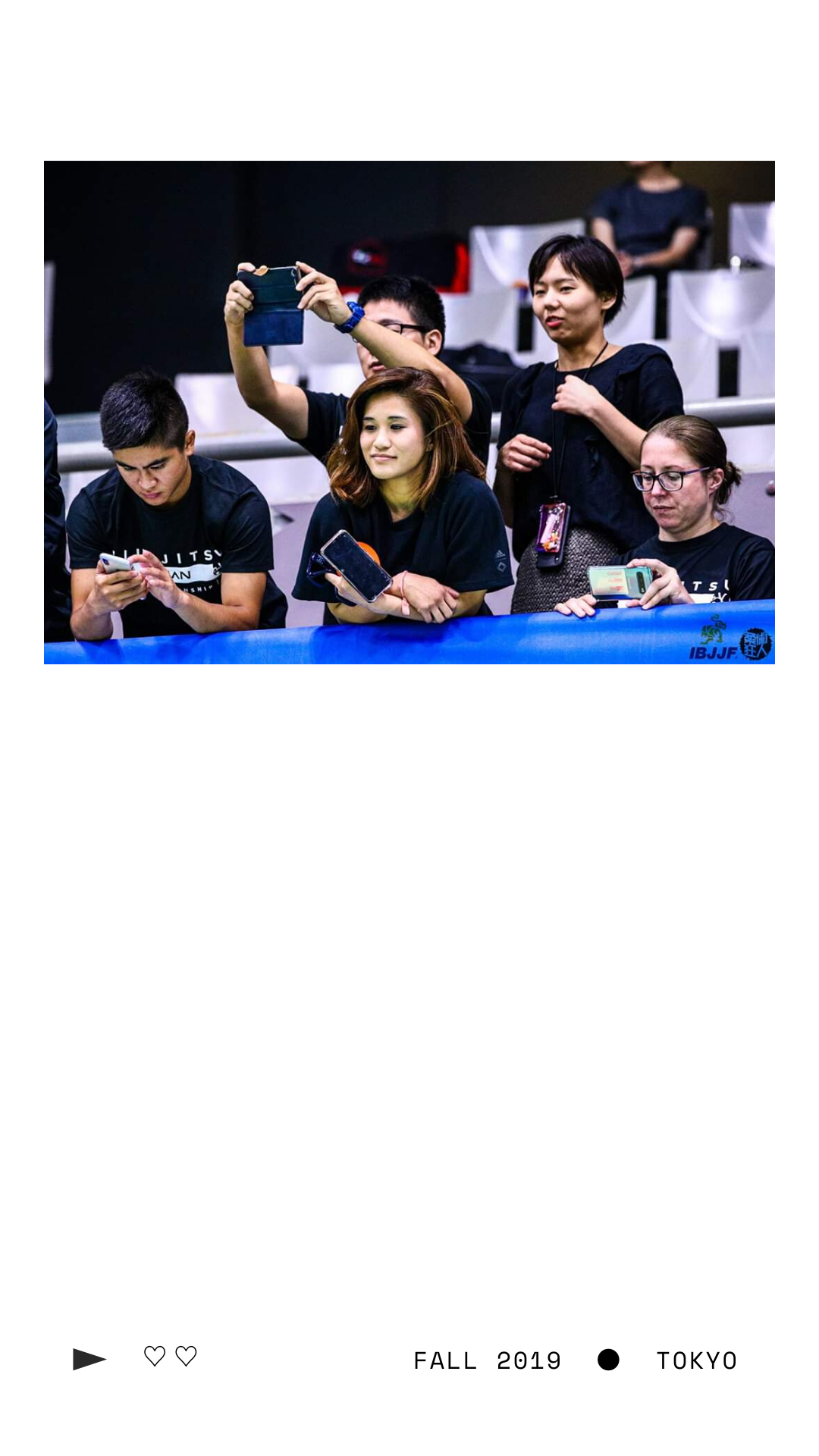
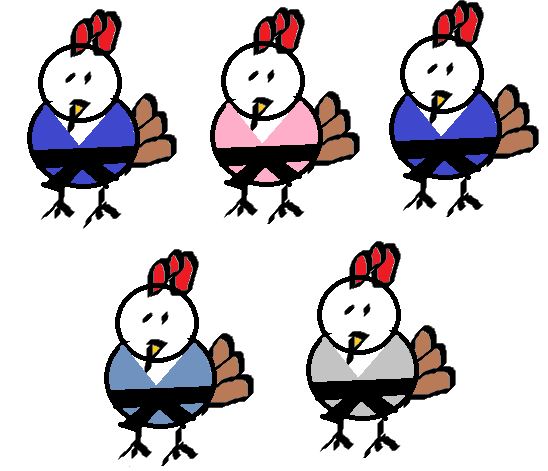
Heffernan explained the concept of social capital through William Muir’s study of chickens and productivity. First, Muir started with a group of average chickens.
Average chickens – Muir left this group alone for 6 generations.
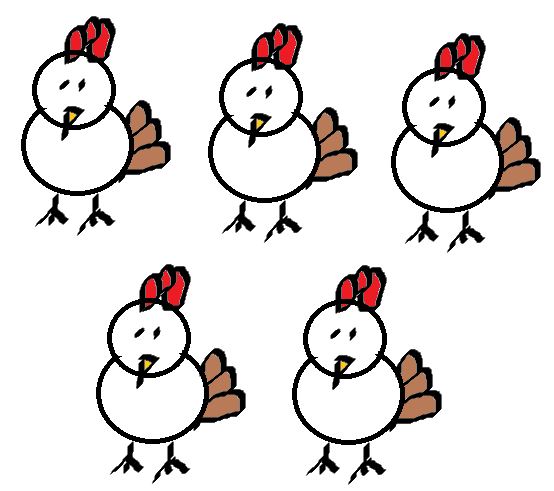
Muir then created a second group of chickens (the “Superflock”) consisting of the “individually most productive chickens.” After each generation, the most productive superchickens were pulled for breeding.
Superflock – We’re the superchickens! 
At the conclusion of Muir’s experiment–after 6 generations for each chicken group–he found interesting results. The group of average chickens were plump with a dramatic increase in egg production whereas the Superflock was left with only 3 chickens–the rest had been pecked to death. True story…
So I now pose the question–
“Should we create BJJ superchickens?”
Well I think this depends on many different factors and perspectives. If we look at Muir’s experiment, a communal environment of average BJJ practitioners could theoretically produce successful and productive individuals among the entire group, and a highly competitive environment would yield a smaller number of the highly successful superchickens. We must also note that Muir’s experiment does not suggest whether the superchickens were actually more productive than the group of average chickens that became highly successful over 6 generations.
It is a gamble–either way–however, I would much rather be part of the average group. This isn’t because I’m not a competitive person–I am. It’s just that my objectives in jiu jitsu are more deeply rooted. I train for my own happiness and self-gratification, but what is happiness when you do not have true friends and supportive teammates to share this with? Think about how happy you are–truly happy–when your closest teammates do well at competition or get promoted. That is an organic feeling that cannot be faked.
I believe that superchickens really can be top competitors and admired athletes in the sport, but one thing is certain–there will always be someone better than that superchicken. As a BJJ superchicken, you may have pecked your way to the top, but you will always have to peck at others in order to maintain your status and beat out the other rising superchickens.
We know now how the superflock creates superchickens, but how is it that the average flock managed to succeed over time? Heffernan posed the following elements in her discussion to this phenomenon in success in groups:
If you divulge yourself among the average chickens, support each other, work hard, and embellish the elements listed hereof; you can all improve. It may take several “generations,” but in the end, the entire group will have a larger probability of success–after which, you will all be “bjj superchickens.” So let’s all stop the pecking order.
Some romantics believe everyone has a soulmate. I’m not sure if that’s true in love, but I think it is very much true in bjj. You know the feeling. It’s that moment when you engage in an effortless roll…when you slap hands and smile, knowing that it’s going to be a fun roll…when you transition from position to position with little resistance, but with the mutual agreement on the intensity of the transitions, technique, and overall movement…it’s when the time is called, and you both slap hands and hug in relief because you both experienced an incredibly gratifying roll while each improving on some aspect of the game. Some may think it’s coincidental, but I like to call it a match with my jiu-jitsu soulmate.
Some of these training relationships come naturally, but sometimes, it is more of a challenge. Over the past 3 years, I have struggled in finding the right balance with some of my training partners. I’m not going to lie. When I first started training, there was a lot of finger-pointing when things didn’t go my way in training. “He’s going too hard with me. He’s overcompensating with strength. That person hogged the entire roll. I didn’t get to try anything.” Even to this day, I find myself having those mental thoughts, but in reality–I need to tell myself that there is not or should not be any ill-will against my training partners. We all just want to get better, and it’s not always your training partner’s fault. It could very well be your fault, or the fault of you both. In the end, there is a lesson to learn in order to make this work–whether a lesson in bjj or in your own personal weaknesses.
On Saturday, I rolled with my teammate who we will call “Russell.”
I used to get so frustrated rolling with Russell. He started training about 6 months after me. He was 15, and I was 31 at the time. He was about 6′ tall; I was (still am) 4’11”. Russell was about 200 lbs; I was 115-120. We were both white belts. I was a stressed out and high-strung attorney working 65-80 hours a week, and Russell was a sophomore in high school with a pastime of playing video games. We had nothing in common.
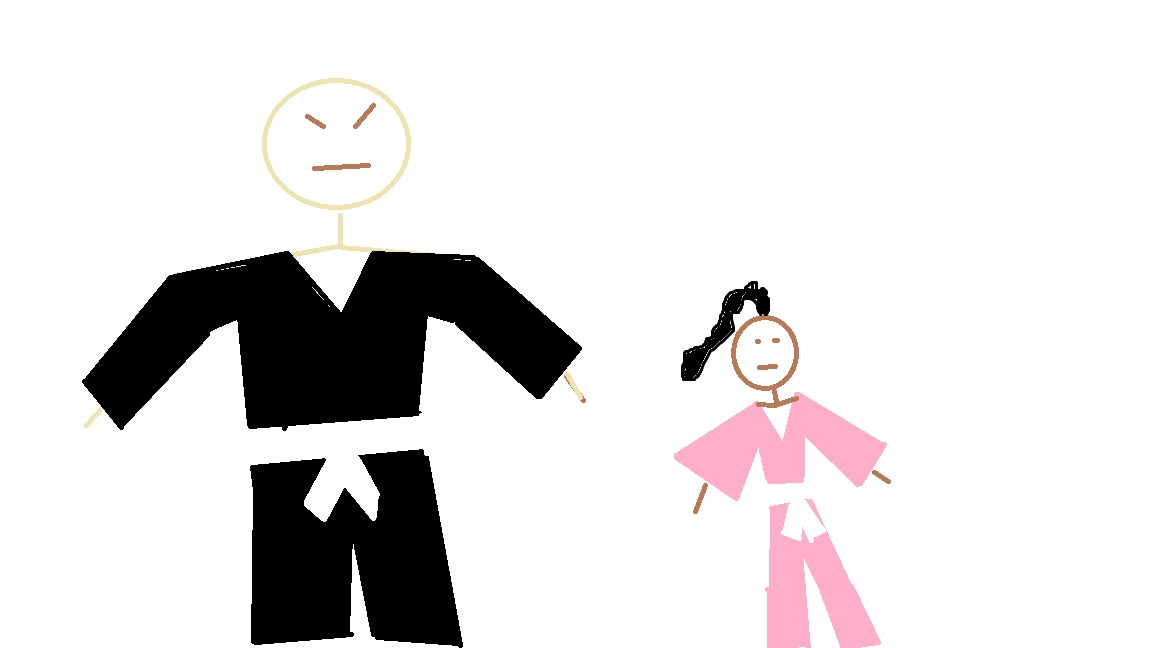
A slight exaggeration, but this was Russell and me.
I would get slammed, smashed, and tossed around during our rolls. I would always blame our rough sparring on him and could see little fault in myself. I would do my best to survive, but often felt that he would go too hard or use his strength against me rather than technique. It was incredibly demoralizing, and I also found it difficult to connect with him off of the mats considering our age gap and dissimilarity in interests. I saw him as a little kid, and he refused to speak to me as an adult who was twice his age. It was ugly.
We stopped sparring together for over year, and this is what I have learned:
1) I need to be more patient.
2) I need to communicate my issues with my training partners.
3) I need to stop being selfish.
4) Before blaming others, I need to ask myself, “Is there something that I need to improve about myself?”
5) If I do not constantly self-assess, I will run out of training partners.
Russell and I each went through our own journey during this time apart. We worked on different techniques. We helped different newcomers who joined the gym since we had become more seasoned. We each took different paths in our competitions and supported each other at a distance. Recently, we have been paired together, and something has clicked for the both of us. We were both adequately challenged. I worked on my guard retention while he worked on his leg drags and movement. We put each other in compromising positions, but somehow found a balance in the intensity of our rolls and transitions. During Saturday’s roll, we had that moment when we slapped hands and hugged in relief because we both experienced that incredibly gratifying roll. After 2 years and individual challenges in our own games and progression of bjj, I can now proudly say that Russell has become one of my jiu-jitsu soulmates. It is one of the greatest feelings, and I’m ready to search for more jiu-jitsu soulmates.
I have always been an enthusiastic writer–whether in my own travel journals, at work, or through dated outlets such as AsianAvenue, Xanga, or Blogspot. However, my most recent aspiration has been in the world of brazilian jiu-jitsu, thus cultivating this new blog.
Friends have asked, “Brenda, what will you write about?” and I half-jokingly respond with, “I will write about being a bjj nobody.” In actuality, most bjj practitioners are “nobodies” in the context of the bjj community. We’re life-style hobbyists, working professionals, students, parents, etc…Most of us do not train full-time. We do have a voice and perspective, though. I will write about my adventures as a part-time female practitioner– my challenges and successes in training as a significantly smaller person, weight loss and dieting, patience and control of my mental demons, and management of my work and social life.
I have just hit 3 years of training, and I have a long way to go in my adventures. Happy reading, friends!
#tbt
Day 1:
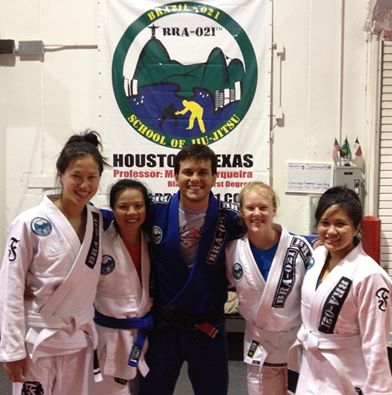
Now:
 i am brendadee