In a 2015 TedTalk entitled Forget the pecking order at work, Margaret Heffernan eloquently stated,
“If the only way the most productive can be successful is by suppressing the productivity of the rest, then we badly need to find a better way to work and a richer way to live.”
This statement reminds me of the moment I knew my current company would be the perfect fit for me. I was interviewing with one of the senior executives and asked, “How do you measure success.” He responded, “What makes me proud at the end of each quarter is not how many deals we have closed or how much revenue we have brought to the company, but it is when I hear the tales of our team members stepping in to support and assist each other in order to successfully close out the quarter.” I was confident then and even still confident now that development of social capital has been one of the key factors to its multi-billion dollar success as a company.
Heffernan explained the concept of social capital through William Muir’s study of chickens and productivity. First, Muir started with a group of average chickens.
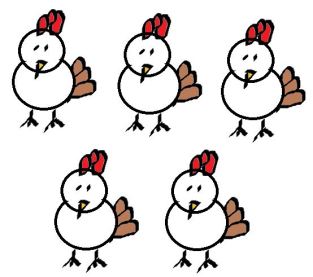
Average chickens – Muir left this group alone for 6 generations.
Muir then created a second group of chickens (the “Superflock”) consisting of the “individually most productive chickens.” After each generation, the most productive superchickens were pulled for breeding.
Superflock – We’re the superchickens! 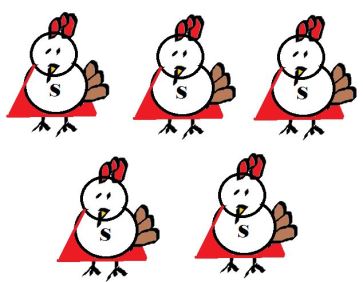
At the conclusion of Muir’s experiment–after 6 generations for each chicken group–he found interesting results. The group of average chickens were plump with a dramatic increase in egg production whereas the Superflock was left with only 3 chickens–the rest had been pecked to death. True story…

So I now pose the question–
“Should we create BJJ superchickens?”
Well I think this depends on many different factors and perspectives. If we look at Muir’s experiment, a communal environment of average BJJ practitioners could theoretically produce successful and productive individuals among the entire group, and a highly competitive environment would yield a smaller number of the highly successful superchickens. We must also note that Muir’s experiment does not suggest whether the superchickens were actually more productive than the group of average chickens that became highly successful over 6 generations.
It is a gamble–either way–however, I would much rather be part of the average group. This isn’t because I’m not a competitive person–I am. It’s just that my objectives in jiu jitsu are more deeply rooted. I train for my own happiness and self-gratification, but what is happiness when you do not have true friends and supportive teammates to share this with? Think about how happy you are–truly happy–when your closest teammates do well at competition or get promoted. That is an organic feeling that cannot be faked.
I believe that superchickens really can be top competitors and admired athletes in the sport, but one thing is certain–there will always be someone better than that superchicken. As a BJJ superchicken, you may have pecked your way to the top, but you will always have to peck at others in order to maintain your status and beat out the other rising superchickens.
We know now how the superflock creates superchickens, but how is it that the average flock managed to succeed over time? Heffernan posed the following elements in her discussion to this phenomenon in success in groups:
- High degrees of social sensitivity–empathy and the genuine level of understanding
- Equality in voice –no one voice dominates and no passengers
- Women–I may be biased with this, but honestly–I strongly believe diversity in groups is key to gaining valuable perspective
If you divulge yourself among the average chickens, support each other, work hard, and embellish the elements listed hereof; you can all improve. It may take several “generations,” but in the end, the entire group will have a larger probability of success–after which, you will all be “bjj superchickens.” So let’s all stop the pecking order.
 i am brendadee